
Kitchen sinks
Cooking grease cools and sticks inside the pipe, and food bits and soap ride along with it. Once the pipe narrows the sink drains slowly, and the plumber clears the trap and the stretch behind it.
A slow sink, a gurgle in the pipes or water that will not leave a tub is a stoppage showing itself. When you call, name the drain, and the plumber you are connected with plans from there.
Kitchen drains, bathroom drains, laundry drains and basement floor drains are all included, right out to the main line leaving the house.
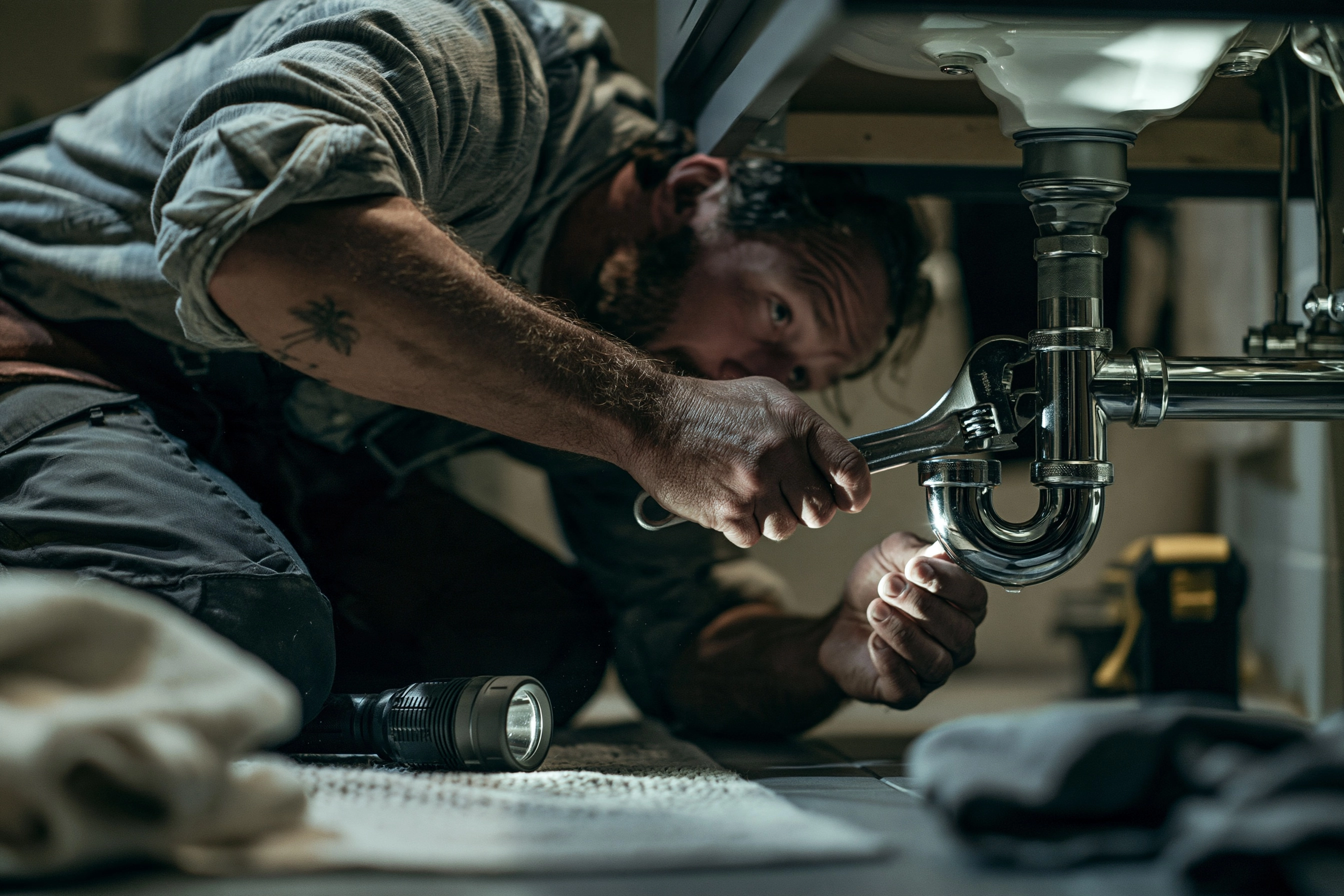
Cooking grease cools and sticks inside the pipe, and food bits and soap ride along with it. Once the pipe narrows the sink drains slowly, and the plumber clears the trap and the stretch behind it.
Shower and tub drains catch hair and soap film, and bathroom sinks add toothpaste and cosmetics. A cable pulled through the line brings the buildup out.
Washing machine standpipes fill with lint, and a basement floor drain can silt up until water stands. The plumber opens the line and then pours water through to prove it runs.
If the tub, the toilet and the kitchen sink all back up together, the main drain is the likelier culprit than any one fixture. A cable or water jet clears it, and a camera can inspect the pipe afterward.
A cleared clog does not trigger the permit process. Ordinary maintenance in the state construction code, which includes stoppage clearing, needs no permit, inspection or notice.
Grease belongs in the trash and not down the kitchen sink, and a hair catcher keeps hair out of a shower drain. A drain that clogs again and again may have trouble further down the line, which a camera can show.
Repeat clogs can mean roots or a break, so sewer line repair is the next place to look, and fixture repair handles worn traps and faucets. For anything else, see the homepage.
Call us to discuss your current issue and how we can assist you. The call is free and you get a free, personalized estimate with no obligation. We're here to help.
Call (855) 321-3426